
 |
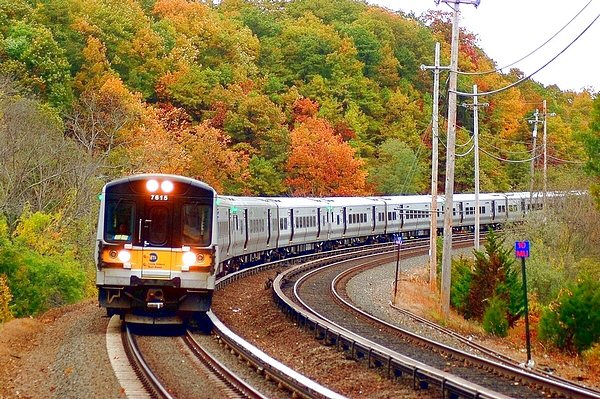
| (Photo credit: Mike McDermet/Trains Are Fun.com) |
 |
| A flat spot. |
 |
| Now that's what I call a flat spot! (Photo credit: Argenia Railway Tech.com) |
The phenomenon, called "slip-slide" is one we're all somewhat familiar with. As the leaves fall onto the tracks and are crushed by these monstrous things of metal called trains, they leave behind an oily residue, called pectin. This pectin gums up the rails and causes trains to keep sliding forwards when the engineer tries to apply the brakes.
The trains wheels try to stop spinning, yet the train keeps moving forward. As you might imagine, this involuntary lack of braking isn't very good for the trains wheels. What happens frequently in these cases is that these things called "flat spots" develop on trains wheels. Basically, the resistance between the rail and the train's wheels during one of these sliding episodes is so great that the rail actually manages to eat away at the trains wheel, making them much less round.
These flat spots cause headaches for everyone. They cause maintenance headaches as these cars often have to be taken out of service to have their wheels trued (made round again), and they also cause physical headaches to the train's passengers as the extremely loud banging noise that a wheel with a flat spot can make is enough to drive someone insane. I've been on M7's during leaf season where it has sounded like the wheels were square that's how much noise they were making.
But the LIRR does work to combat this evil slip-slide headache. On their website they have a video explaining the conditions and how it impacts their passengers. The video is so old (2007) that it was created before the LIRR got their YouTube channel, so I can't embed it in here for your viewing, but you can see it on the LIRR's website here.
During leaf season, the LIRR's engineers and dispatchers keep a sharp eye out for slippery rails. When a particular area is seen as being troublesome, the trains approaching the area are warned and usually slowed down so they don't go sliding right through the station. Lots of times engineers will begin braking in advance (or in the case of stops along the Babylon Branch, they start braking for the next station when they're halfway out of the first). While this can help the chances of trains making their stops without slipping past them, it does hurt timekeeping, so next time you're waiting for your train and you hear it's being delayed to "slip slide conditions" you'll know why.
The LIRR also combats this awful slip-slide nuisance with special Sandite and Leaf Crusher trains. There are two Sandite trains that consist of two old M1 cars that have been converted to house special tanks and sprayers. M1 cars 9401^ and 9591* underwent this conversion some time ago, and it's a little known fact that these are the last two M1 cars still in service on the railroad (though not in revenue service, that train left several years ago). [^-M1 9401 was converted into "E401" and does not have a blue stripe. *-9591 was converted into E591 and has a blue stripe.)
The special Sandite cars secrete a slimy substance onto the rails that breaks down the pectin and helps shield the rails from the next day's leaves. The Sandite trains are not a perfect solution, though, as there will never really be a real answer to slip-slide, though they do help. There are two Sandite sets, each having one of the M1 cars bracketed by two MP-15AC's. The two trains start out of Richmond Hill around 8pm and they can usually cover the entirety of electric territory plus the Oyster Bay branch each night. One set usually does gets the Mianline/Port Jeff/Oyster Bay Branches and the other one usually gets Babylon, Port Washington, and the smaller branches. Whatever isn't done on one night is put to the top of the list for the following night.
The Sandite trains usually start around Mid-October and run each night until the trees are bare. The Atlantic Branch between Brooklyn and Jamaica doesn't usually get visited by the Sandite trains as most of it is underground, and there aren't many leaves bothering the overground portion.
Here's a video of the normally nocturnal Sandite train in the days after Hurricane Sandy:
(Note: if you're subscribed to the site by e-mail you may have to view this in your web browser to see the video)
The LIRR also uses two leaf-crushers for the diesel portions of the railroad. The LIRR's diesel equipment is fitted out with sanders, so slip-slide is less of an issue past the territory where MU's run. However, the main goal for the leaf crushers is to clear out any leaves possibly obstructing the sensor mechanisms for grade crossings. Once leaves really start to build up in there the chances of a crossing not activating properly increases, and we wouldn't want that. Unlike the Sandite trains, the leaf crushers are consists that are weighted down with a couple gravel hoppers (instead of M1's) and are bracketed by MP-15AC's. The leaf trains go around and crush the leaves off the rails.
There are two leaf crushers, one is based out of Ronkonkoma Yard and leaves there to cover the Ronkonkoma-Greenport Segment of the Mainline. If you're interested in catching it, it usually leaves of 11 track at 8:45pm, meets train 253 on the LD siding at Riverhead and arrive in Greenport around 11:15pm before retreating back west. The second one traditionally hides out on Wellwood siding on the Central Branch during the day and covers the entire Montauk Branch east of Babylon at night.
Here's a video of the leaf crusher train making its way through Bethpage under the cover of darkness:
In the end, the only real way to totally eliminate the slip-slid problem would to eradicate every single tree on Long Island (something I and many other seasonal allergy sufferers might not oppose!). Since that obviously can't happen, an aggressive tree-trimming program and running the Sandite/Leaf Crushers like these help, but in the end, the LIRR just has to stay on its toes and keep those wheel truing machines in working condition!
I'll leave you with a link to a post on I Ride The Harlem Line which contains some cleverly Photoshopped cartoon Banana peels placed in front of Metro-North trains:
 |
| (Photo credit: I Ride the Harlem Line.com) |

You sure that last flat spot picture isn't of 125 from last weekend on the Waterbury branch??? ;)
ReplyDelete