
The short answer to that question is yes, but the real answer is much, much, much more complex.
The main problem that with Penn Station Access is the political cloud around it. Politicians are up in arms that the "MTA is not guaranteeing the riders of Metro-North the same fair treatment that the LIRR people get." The huge problem is this: politicians know nothing. All the politicians from Westchester, Putnam, and Duchess counties know is that Metro-North riders can't get a one seat ride to Penn Station and therefore they have to whine and complain so they can improve their chances of getting reelected.
Does anyone wonder why the MTA has been relatively quiet on this matter? Short of one little page on their website with some documents and a map, the MTA has made no real declaration either way on this project. Why? Because they don't know if it can work.
This post has three parts: The Project, the Problems, and the Stupidity.
 Part I: The Project
Penn Station Access would bring Metro-North trains from the Hudson and New Haven Lines
and bright them right into Penn Station. From there they will be right by the West Side where they can get downtown along the (1)(2)(3) or (A)(C)(E). They'll be on the West Side, you get the picture.
Unlike East Side Access, Penn Station Access would bring trains into Penn Station using largely existing infrastructure.
Hudson Line trains (illustrated by the green line at right), which would originate form places like Poughkeepsie and Croton-Harmon would run down the Hudson Line to the Spuyten Duyvil area (see map) where they would split off from the Hudson Line and run down Amtrak's Empire Connection. The current path that Hudson Line trains take curves to the east and follows the river down to the Park Avenue Bridge and into Manhattan that way. The Empire Connection, which currently carries Amtrak Empire Service and Long Distance trains that travel between New York and Albany. (if all this is sounding familiar, just skip down to Part II)
The Empire Connection has a bit of history around it. The "West Side Line," which first came into existence in the 1840's was part of the NYCRR and ran from as far south as St. John's Park Depot all the way up to Peekskill and Albany. It was used for many, many years as a freight route right into the Meatpacking district of Manhattan.
However, after many years of significant expansion along Manhattan's West Side, the freight line into the heart of it all became more of a hazard than a benefit. The streets of Manhattan were (and are) crazy enough as it is and having freight trains rumbling through at all times of the day didn't help anything. And as the amount of people being struck by trains along the West Side Line increased, so did opposition to it. It eventually got to a point where the best option was to abandon the West Side Line altogether.
So idle it sat for many, many years.
In 1971 Amtrak, the National Passenger Railroad Corporation came into being and began to operate most of the nation's intercity rail services. For the first two decades of its existence Amtrak had two terminals in New York: Pennsylvania Station and Grand Central. At one time Grand Central was the only place to catch a train to Albany and Penn Station was the only place to catch a train to Washington.
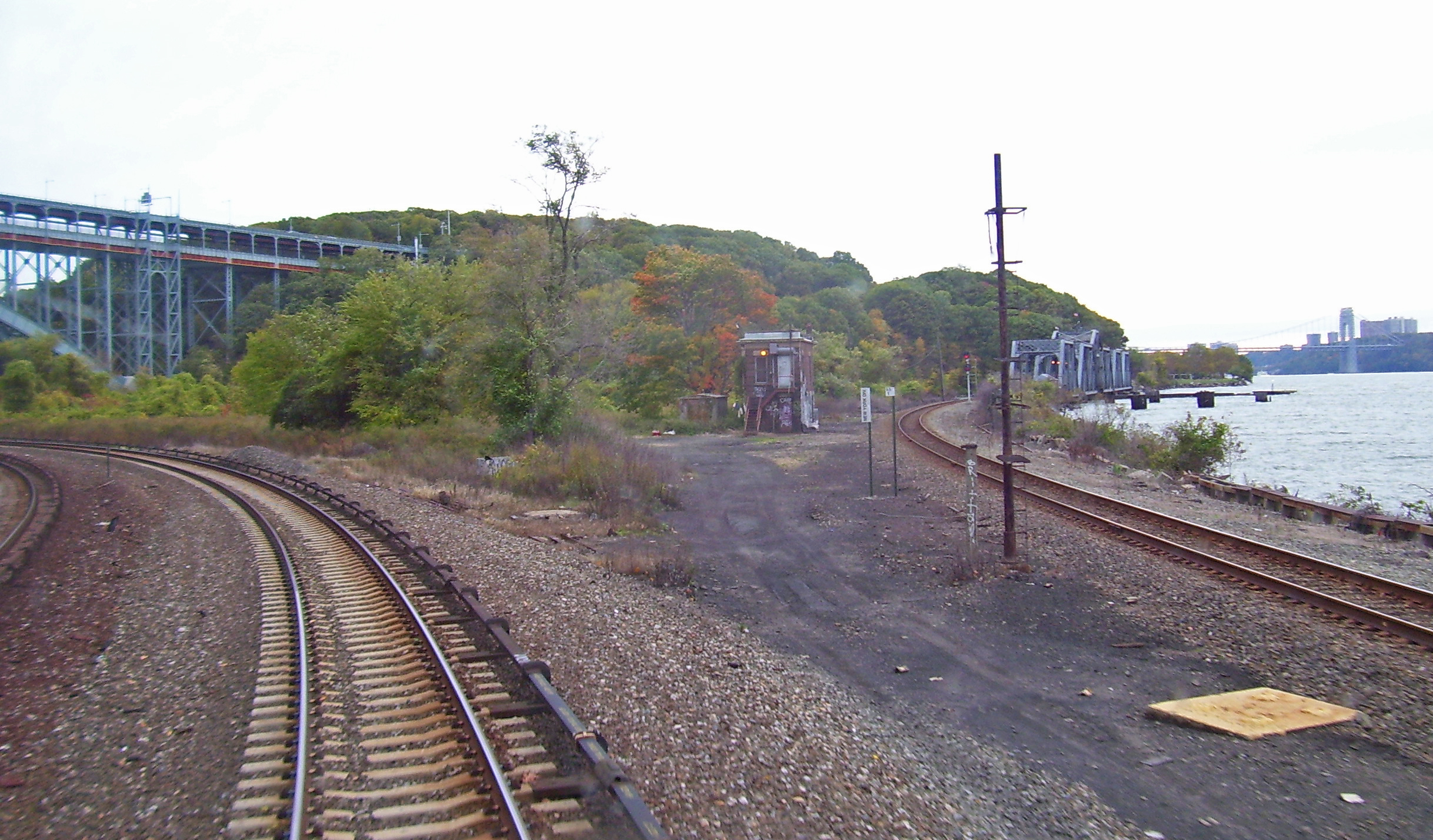 |
| The Empire Connection to NYP curves off to the right, the current Hudson Line to GCT curves off to the left here. |
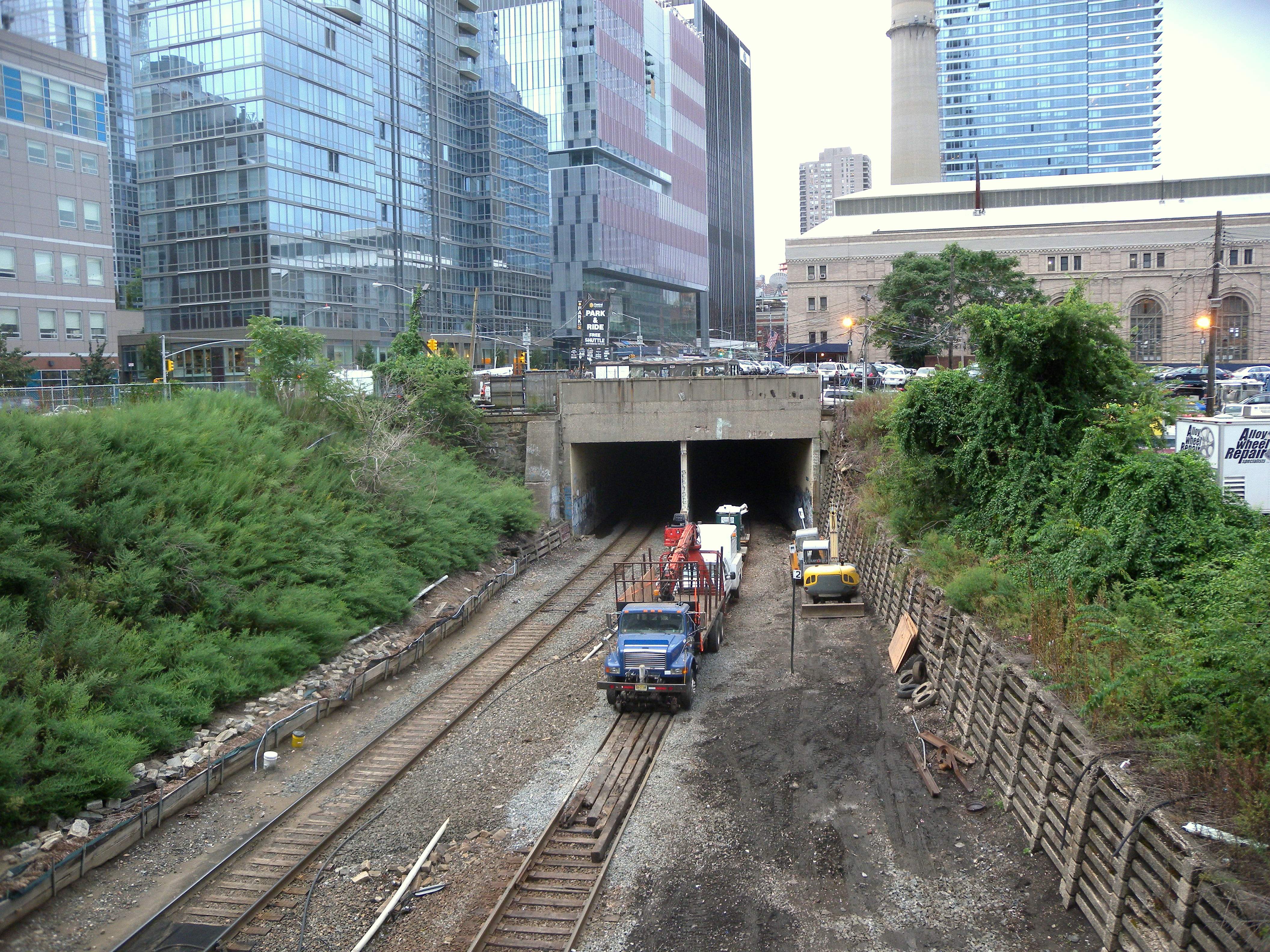 |
| The Empire Connection in Midtown Manhattan |
Amtrak could now run those trains from Albany down the Empire Connection right into Penn Station where they could easily connect to all of Amtrak's other New York services.
 |
| The Hell Gate Bridge, a part of the Hell Gate Line that might carry MNR trains to NYP one day. |
Metro-North New Haven Line trains would also use existing infrastructure to access Penn Station. New Haven Line trains would split off from their current route just after New Rochelle station and take Amtrak's Hell Gate Line down through the Bronx over the Hell Gate Bridge, down into Queens, and into Penn Station through HAROLD interlocking and the East River Tunnels.
The Hell Gate line currently carries Northeast Regional and Acela Express trains on their way to/from Boston, Springfield, and Vermont.
The Metro-North/NJTransit "football specials" also take this route. For all Sunday 1pm Giants or Jets home games at be Meadowlands, Metro-North teams up with NJTransit to provide a one-seat ride from New Haven Line stations to Secaucus Junction via Penn Station. At Secaucus, customers can transfer to trains on the lower level to the Meadowlands. The service has been pretty successful, though logistically it can only be provided within a very small window on Sundays due to NJTransit (who has the only equipment that works on the entire route) having to have their stuff back in NJ at a certain time to allow it to be positioned for the Monday morning rush.
So all of the infrastructure is already in place to allow this to happen. Great! Well, almost all of the infrastructure is in place. On the Hell Gate Line Metro-North will need to install roughly two miles of third rail to run from HAROLD interlocking in Queens to just north of the voltage change near GATE interlocking. Just north of GATE interlocking (an Amtrak interlocking with a pair of crossovers just before the bridge) there is a voltage change. The M8's overhead wire systems can only work on the voltage to the north of this change point, south of this point they will need to drop their pantographs--or else their passengers will be in for quite a fireworks show when M8 roof humps start exploding! South of this voltage change point the M8's would need to run on the newly installed third rail to get into Penn Station, just like the LIRR trains. Here is a map diagramming the whole situation.
So all of the infrastructure is already in place to allow this to happen. Great! Well, almost all of the infrastructure is in place. On the Hell Gate Line Metro-North will need to install roughly two miles of third rail to run from HAROLD interlocking in Queens to just north of the voltage change near GATE interlocking. Just north of GATE interlocking (an Amtrak interlocking with a pair of crossovers just before the bridge) there is a voltage change. The M8's overhead wire systems can only work on the voltage to the north of this change point, south of this point they will need to drop their pantographs--or else their passengers will be in for quite a fireworks show when M8 roof humps start exploding! South of this voltage change point the M8's would need to run on the newly installed third rail to get into Penn Station, just like the LIRR trains. Here is a map diagramming the whole situation.
Metro-North would have to install the two miles of third rail, plus a substation to feed it. All of that would cost MNR a good chunk of cash, but it would still be less than whatever ESA costs.
Metro-North would also probably have to expand its fleet of Dual-Mode locomotives to accommodate all these extra trains. Hudson Line trains into Penn Station would have to be powered by dual modes because the Empire Connection currently does not have any third rail and installing it would be too expensive. Furthermore, Metro-North's fleet of P32AC-DM's is stretched pretty thin now. There would also probably have to be a rolling stock purchase of some sort to supplement the Shoreliner fleet, but such an expansion would be necessary with any new service.
Ok cool. All the infrastructure is in place and the two main obstacles can be overcome without breaking the bank. So what gives?
Part II: The Problem
While having almost all of the infrastructure in place is certainly good for MNR (they don't have to shell out billions to build it), there is one tiny problem: all of the infrastructure is currently being used. While there may be some spare capacity on the Empire Connection and on the Hell Gate Line there is zero capacity into and out of Penn Station during rush hours. Zero. Zilch. Nothing.
Here is the thing: if Metro-North wants to add trains into Penn Station, some trains are going to have to come out. It's (sorta) that simple.
But what trains are going to be yanked out of Penn Station so that Metro-North ones can be put in? The logical answer would be LIRR trains after ESA opens.
And that is where the stupidity begins.
The root of it is this map. All of the Hudson Valley politicians who are up in arms about this "injustice" are looking at the wrong map. They're looking at this map:

And all of the politicians think "Well if the LIRR gets to add a dot to their map (Grand Central) then Metro-North has the right to do the same!" They're all looking at it as dots on the map. Instead of looking at that map up there they should be looking at these maps:
The top diagram is a track map of Grand Central Terminal (the upper and lower levels that serve Metro-North trains). The bottom is New York Penn Station.
Just take a look at those--the top diagram (Grand Central) shows 67 tracks along 44 platforms. That's the most platforms out of any station in the world. And those 67 tracks and 44 platforms are being used by one, and only one, railroad. Metro-North.
Now take a look at the bottom diagram. At Penn Station there are only 21 tracks. 23 less than what Grand Central has. And those 21 tracks are shared among three railroads: the LIRR, NJTransit, and Amtrak.
So Metro-North has 44 tracks all to itself while the LIRR, NJTransit, and Amtrak all fight tooth and nail over on the West Side for those mere 21 tracks.
When you look at it this way, the whole idea starts to make less and less sense. Yeah Penn Station Access sounds cool and all, but how could their possibly be any room?
And all those who say that "LIRR East Side Access would be taking train slots away from Metro North" are completely wrong. The new LIRR tracks are being constructed in a huge cavern deep below Grand Central that are in no way connected to the current station tracks. The LIRR and MNR aren't sharing any tracks at GCT. Yeah, Metro-North lost Madison Yard on the lower level to the ESA project, but there was really no net reduction in passenger service to customers. It isn't really on a comparable scale.
Furthermore, many of the politicians and official know-nothings think that after East Side Access opens the LIRR is going to have a whole lot of spare room in Penn Station...so why can't Metro-North use it?
The problem is this: the LIRR isn't really going to have all that much spare room after ESA. In my "Redrawing the Map of the LIRR, Post-ESA" post last month I demonstrated how the LIRR could maintain frequencies of 12 trains per hour to Grand Central, 16 to Penn Station, 4 per hour to Atlantic Terminal, and 1-2 to Hunterspoint Avenue after ESA opens. And that's just in off-peak times. During rush hours there will be a lot of express service to both terminals and the LIRR is going to need all the space it can get. Plans for ESA call for 24 trains per hour during rush hour, Penn Station currently sees roughly 28-32 per hour in the morning rush.
The thing is people think that once ESA opens there is going to be a substantial and direct shift of riders from Penn Station to Grand Central. While some people will shift to GCT when it opens, many will not. And those people who do not will be supplemented by new riders. LIRR ridership is not going to be exactly the same after ESA opens, just with the number split up among the two terminals. No, no, no. Ridership is going to explode. Just watch. The LIRR will have just as much need as ever to take care of its riders, and provide enough trains to both terminals for them.
Part III: The Stupidity
Now with all this stuff here don't think I'm absolutely dead-set against all things Penn Station Access. I'm not. I'd like to see PSAS happen and I think it would be good for the regional transportation network as a whole. However, I do not want it to cause more heartache and headache then it needs to with all of the political bellyaching that is and will be going on.
I just don't think it would be a good idea for anybody to be rushing into things. As "desperately needed for the Hudson Valley region to survive economically" might be, it should not even be on the table until at least five years after ESA has opened.
Five years after ESA has opened. By that point we will have a very good look at how LIRR ridership and service levels have changed and in which direction they are trending. Then, and only then, should the MTA revisit this idea. If LIRR ridership at Penn Station drops substantially as some say it might and there is now room for Metro-North trains, then, by all means, send them in. However, if all of them turn out to be wrong and I turn out to be right in saying that the the vast majority of people going to the new ESA station will be brand-new LIRR riders and Penn Station still needs the amount of service it has today, then Metro-North should be told to take a hike.
Therefore, I heartily believe that there should be a ten year moratorium on the Penn Station Access idea. Everybody agrees to not whine and bellyache and bring the story into the news every couple months for ten years. In 2023, four years after ESA opens, the MTA can soundly revisit the subject and make an educated decision at that point.
The ridiculous Hudson Valley politicians "demand that the MTA give a firm promise to bring our commuters to Penn Station after ESA opens!" And in turn the Long Island politicians bellyache back saying that they don't want their poor constituents being slighted out of train service into their station (because, after all, they were there first).
They all need to shut up about it. For ten years. Period. If they're still in office in ten years (unlikely) then they can start whining about it again at that point. But no earlier.
PSAS stays relatively quite for stretches of time. Then, every now and then, somebody feels the need to dredge all that nonsense up and it usually justs gets people unnecessarily worked up over nothing.
And this time the PSAS nonsense is beginning to hinder the daily operations of the MTA. In a post on Second Avenue Sagas yesterday, Benjamin Kaback reports that LI Senators are holding up the soon-to-be Chairman of the MTA Tom Prendergast's nomination. Here's a brief quote:
"For the latest in petty isolationist obstructionism, we need look no further than Long Island. As I noted last week, Thomas Prendergast’s nomination to head up the MTA seemed to be stalled as the State Senate has taken no action, and today, we’ve learned why. According to a Daily News report, Senator Charles Fuschillo is holding the Prendergast appointment due to fears over LIRR slots being cut from Penn Station in 2019..."This kind of stupidity is the reason why things take immeasurably long to get done in this city these days. If they politicians didn't spend every waking moment of their lives bickering about everything with each other and actually sat down and thought about stuff (and maybe ask some experts who know what the h-e-double-hockey-sticks they're talking about) things might not take half a century to get done.
So write your local senator or assemblyman and tell them to put a sock in it.
So, in summation:
- Penn Station Access (know as PSAS to its cool friends) is a credible, beneficial plan to regional transit that can be put into action using largely existing infrastructure at a fraction of the cost of ESA. However,
- There are currently too many obstacles around Penn Station to make this idea viable just yet, and jumping to any conclusions this early in the game before the ESA opens is idiotic. Therefore,
- All sides should just agree to a ten year moratorium on this issue. Make no promises now that you cannot keep. We'll revisit the issue in ten years after we get a look at what ESA does to LIRR commuting patterns. Then, if it works, the MTA can go for it. If not, Metro-North's out of luck.
